.png?width=1199&height=594&name=Blog%20image%20for%20TRI%20podcast%20(3).png)
digitaldentistry
implantdentistry
dentaltechnology
.png?width=1632&height=656&name=2026%20Digital%20Dentures%20Blog%20post%20(2).png)

In my opinion, digital dentures represent one of the most exciting frontiers in dentistry, driven by rapid development and significant untapped potential. The release of the impressive and highly recommended book about Digital Removable Dentures by Dr. Kukucha and Dr. Nelson Silva offers a good time to make the status of where we are and to take a look further into the future.
I will not repeat the points from the book. Instead, I'll focus this blog on the biggest progress and impact for digital dentures in the coming years.
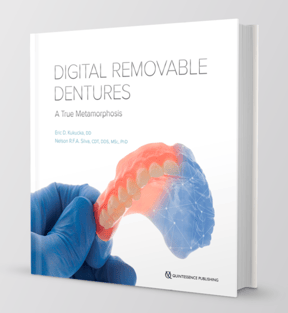 Figure 1: “Digital Removable Dentures - A True Metamorphosis” by Dr. Eric D. Kukucka and Dr. Nelson R.F.A. Silva, 1. edition, 2026 Quintessence Publishing.
The development in the digital removable space has been mind-blowing. In 3Shape CAD alone, more than 6 million partials, ~1 million trays, and ~1 million full dentures were designed in 2025 (Source: 3Shape). Just five years ago, there were hardly any. Zooming in on digital dentures, it grew 20% last year, and in 2024, it saw an impressive 80% case growth! On top of this comes Exocad, which probably designs a similar number. They don't publish usage data.
The removable world is changing fast, and I believe it will become fully digital in the near foreseeable future, just like fixed prosthetics.
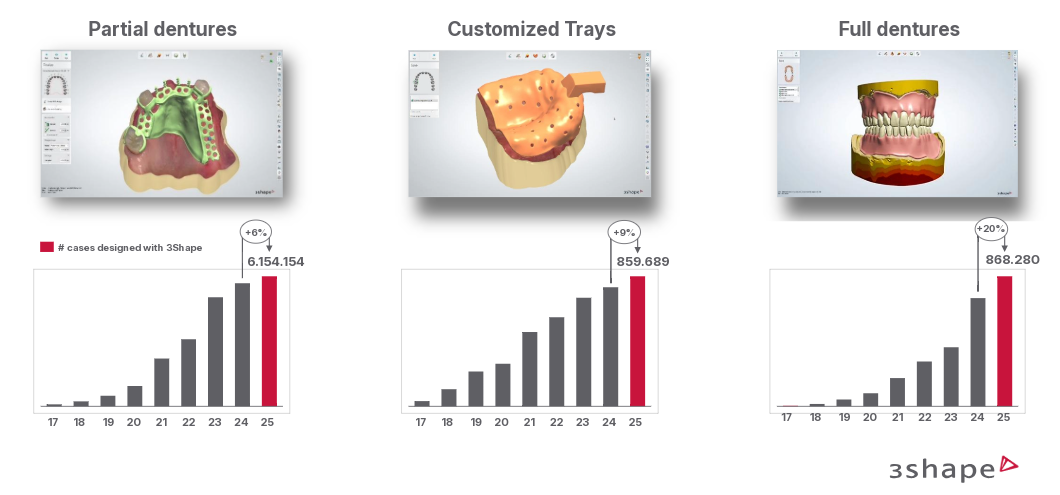
Figure 2: 7.9 million unique removable cases designed in 3Shape Dental System (Lab CAD) in 2025. Source 3Shape.
Acquisition of patient information becomes easier and fully digital
Correct and high-quality acquisition of patient information for full dentures is traditionally complex. Luckily, digital progress has already simplified this a lot, with intraoral scanners now becoming widely adopted. In particular, the reference denture protocol has been a major breakthrough in ease of use and in reducing the number of appointments from 5 to 2-3. Direct edentulous scanning using IOS has also improved significantly lately; see this highly relevant recent review by Dr Ahmad Al-Hassiny from IDD.
In the future, I believe 3D face scanners will become the standard of care. The technology will improve, ensuring truly facial-driven smile design that perfectly matches the patient's facial symmetry and shape; see Figure 3. In addition, other manual measurements will be digitized, i.e., capturing the VDO.
The end game is to capture all patient information digitally in a fast, easy, and predictable workflow.
Figure 3: 3D Face scanning will become the standard of care as it enables true 3D facial-driven smile designs, which 2D photos will never be able to support.
AI design is improving rapidly
AI represents the biggest overall technology shift we have seen in decades, and almost every week I'm impressed by what it can do and how quickly it's progressing.
For Digital Dentures, it will be a great support tool, from diagnostics and planning to AI design and patient communication.
I'm particularly excited and bold about AI design, where we already see significant progress and acceleration of the reduction in design times - more to come in the near future! Design skills and time remain major barriers to digital denture adoption, so these improvements are critical for adoption. At least 5-10 AI companies are advancing this, i.e. Voyager Dental, which can perform AI design with All-on-X cases and soon-to-come Removables within minutes; see Figure 4. AI Automatic Design proposals will not just save design time, but also let patients preview the design, improve patient communication, and serve as a strong planning tool.
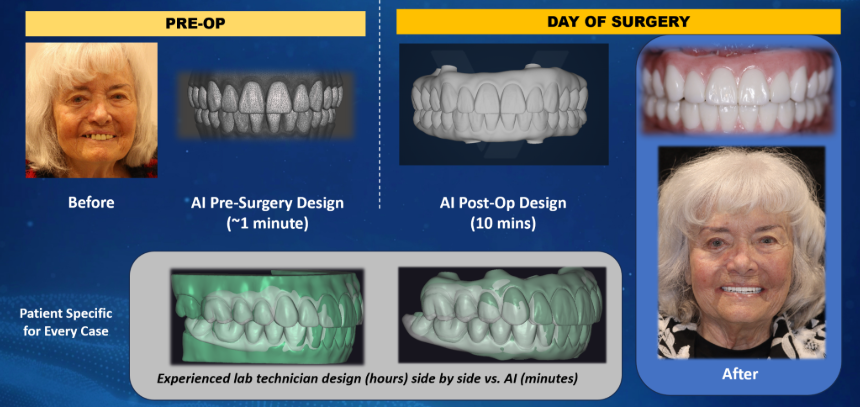
Figure 4: All-on-X fully automated AI proposal by Voyager Dental, soon to be applied for full dentures.
The jury is still out on whether a high-quality final AI proposal is achievable in the near future. I find it more likely that AI proposals will initially be used for individual design steps, such as denture base outline and tooth setup, with manual review and editing afterward. Either way, design time will be dramatically reduced. Also, I am convinced that future AI designs will be based on 3D-facial input.
AI design will start with full dentures, but for sure expand to complete RPDs including the teeth, gingiva, and framework.
3D printing and materials
Manufacturing of digital dentures remains a key topic in terms of process cost, time, and clinical performance. Milling remains a mature, high-quality process that many high-volume digital denture clinics and labs still use. However, I have no doubt that the endgame is 3D printing, where we have seen a lot of progress lately, both in 3D printing technology and on the material side.
For 3D printing, materials and their clinical properties remain the key. Talking to labs and clinics around the world, Lucitone from Dentsply Sirona is currently the main choice and works great, but is highly sensitive to careful processing; see Figure 5. Major efforts are being put into further development of the 3D printing denture materials, and this is crucial and very exciting, as it could make 3D printed dentures the preferred choice!
On the 3D printing technology side, there's a very interesting shift: from Photopolymer 3D Printing (Asiga, Sprintray, Formlabs, and many others) to jetting materials. Jetting 3D printers work like old-school inkjet 2D paper printers. They are jetting materials in 3D space. Leading dental jetting printers are 3D Systems NextDent 300 and Stratasys DentaJet®; see Figure 5. Jetting allows one denture to be printed in one go, with base and teeth, and for individual teeth to have different colors and translucencies. Jetting technology imposes constraints on material properties for particle size and viscosity, and they do not yet seem to fully match the material properties of Lucitone and similar materials.
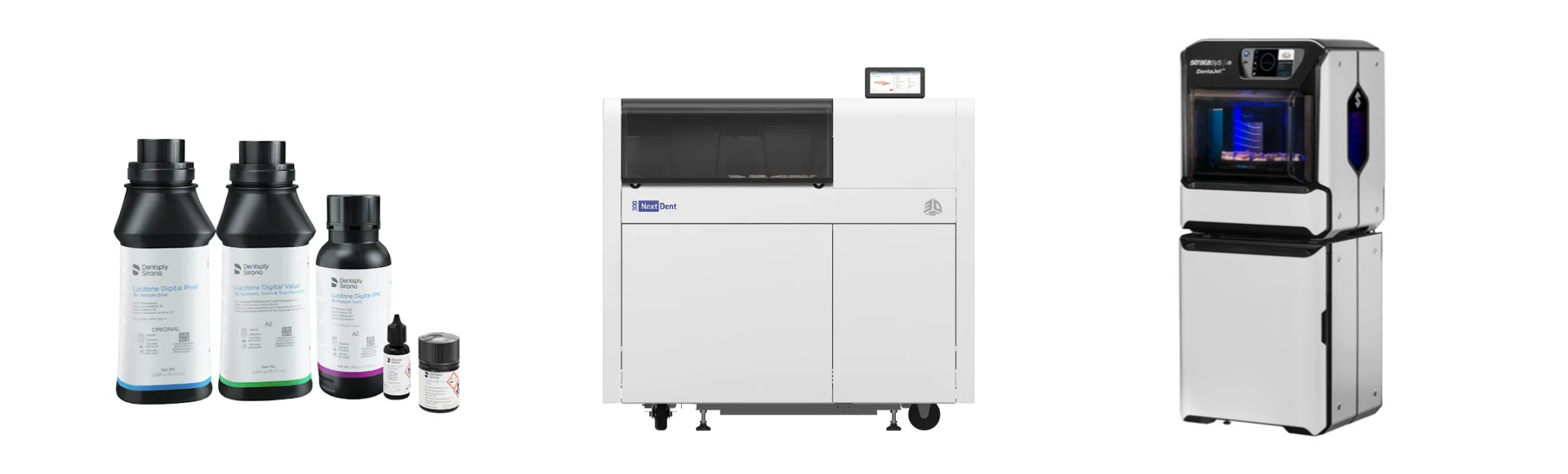
Figure 5:The 3D printing materials Lucitone from DentsplySirona, and NextDent 300 3D printer from 3D Systems, and the J5 DentaJet® 3D printer from Stratasys.
Conclusion and discussion
Digital full and partial dentures are a reality, with millions of dentures being produced every year and continuing to grow fast. I remain extremely excited about the rapid improvements we will see in patient information acquisition, AI design, 3D printing technology, and materials for the benefit of patients, clinics, and labs!
I have no doubt that the removal area will be 100% digital in the future, as we are witnessing with fixed prosthetics. I expect the digital adoption will accelerate in the coming years. Changing people's working habits and ingrained processes remains the hardest part!
A big thank you 🙏 to Dr. Kukucha and Dr. Nelson Silva for inviting me to write a chapter for their new book “Digital Removable Dentures - A True Metamorphosis”. I highly recommend reading it.
Feel free to write to me if you have any perspectives to share for or about my blog.